Department of Sociology professors research social disparities in health and homicides.
By Jordan Chapman
 Is there a greater number of homicides in racially segregated areas than more integrated neighborhoods? Do social inequality, location, income and addiction factor into the illegal marketing of products such as cigarettes? These are the questions posed by Assistant Professor Giovani Burgos, Ph.D., and Associate Professor Jacqueline Johnson, Ph.D.
Dr. Burgos is currently working with colleagues from 果酱视频 and faculty from the University of Florida, Northeastern University, Harvard and Duke to measure the rates of homicide in New York City over the last 10 years along ethnic and geographic lines. He鈥檚 also researching whether police brutality is more likely to occur in segregated areas.
He wants his students to see what he sees in the numbers, to understand the harsh realities of segregation in today鈥檚 society. 鈥淚 see jaws drop when I talk about percentages of segregation,鈥� he said. He gets them involved via classroom assignments, and those who continue to work with him as he begins to write and publish his findings also receive research recognition and letters of recommendation. 鈥淲orking with students鈥攖hat鈥檚 what I really like,鈥� he said.
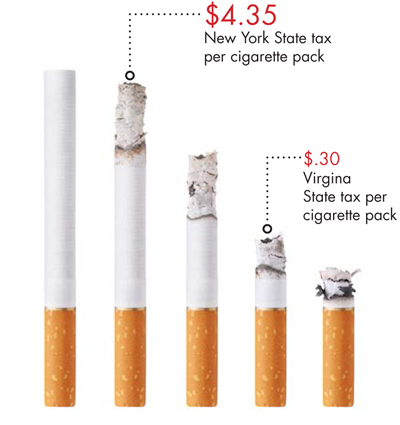 For three years Dr. Johnson has participated in a study with three other sociologists. They scour the streets of the South Bronx collecting empty and discarded cigarette boxes. Cigarette packs and cartons with the cellophane wrappers still intact will have a tax stamp, which shows where the cigarettes were purchased.
鈥淲e take them to the sheriff鈥檚 office and we can use the ultraviolet light to see if the pack has the cigarette tax stamp on it and if it鈥檚 a legitimate or fake stamp,鈥� Dr. Johnson said. They鈥檙e finding a lot of Newport cartons coming mostly from Virginia, where cigarette taxes are a mere 30 cents per pack.
鈥淲hat happens when the neighborhoods become more patrolled in certain areas and suddenly this low-level crime becomes more serious for some groups of people rather than others?鈥� she asked. It鈥檚 a question she will sometimes pose to her students. She鈥檒l get them to relate by mentioning other low-risk crimes. She鈥檒l remind them that downloading music and movies off the Internet is illegal. She鈥檒l mention speeding and the knockoff Coach and Gucci bags sold in Manhattan鈥檚 Chinatown district. Although students will reluctantly acknowledge they鈥檙e performing illegal activities, she often hears, 鈥淲ell, there鈥檚 nothing I can do.鈥�
鈥淚鈥檓 on a mission to change that,鈥� Dr. Johnson said.
This article appeared in the Spring 2015 edition of , the College of Arts and Sciences newsletter.
For further information, please contact:
Todd Wilson
Strategic Communications Director听
p 鈥� 516.237.8634
e 鈥� twilson@adelphi.edu