"My career has been wonderful. My beginnings at 果酱视频 allowed me to move on and up in a way I would never have dreamed possible."
Former Dean of Long Island University鈥檚 School of Nursing
Psychiatric Clinical Specialist
Professional Career:
After becoming a nurse with an Associate of Applied Science Degree, Esther Siegel worked part-time on a medical-surgical unit for two years.听 鈥淚 realized that I needed to learn more,鈥� says Dr. Siegel, who returned to 果酱视频 as an RN-BS student, with tuition paid for by a government grant which also provided a stipend.听 In 1968, she returned to school full time and graduated with her bachelor鈥檚 degree in 1969.听 She worked as a clinical faculty member for one year, but yearned to continue her education in psychiatric nursing.
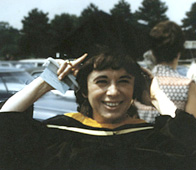 In 1970, Dr. Siegel returned to 果酱视频, again on grant tuition funds plus a stipend, to earn her master鈥檚 degree as a psychiatric clinical specialist. “At that time, a master鈥檚 degree was a significant benefit in the workplace,” says Dr. Siegel.听“It prepared me to move forward with confidence in a setting that did not recognize nursing staff at the level to which I aspired.”
She was able to quickly get a position at Hillside Hospital, a prestigious psychiatric environment at the time.听 Dr. Siegel then initiated a project to allow nursing clinical specialists to be therapists on the psychiatric units.听 “This was a big step in a traditional hospital which did not view nurses in that role,” she says.听 At Hillside Dr. Siegel worked as a team leader on an adolescent unit and then as a therapist on an adult unit, after which she held the position of assistant director of nursing. Dr. Siegel left Hillside Hospital in 1979; “I wanted to start my own practice and return to school for my doctorate,” she says.听 Dr. Siegel began her doctoral studies at Columbia University, Teachers College in 1979 and earned her doctorate in 1985.
From 1980 to 1986, Dr. Siegel worked as a consultant at NYU Medical Center, working with nursing staff on stress management.听 鈥淚t was a wonderful role for me,鈥� she says.听 鈥淚 was able to do what I love to do, and also pursue my doctoral studies.听 It also gave me the opportunity to become lifelong friends with some wonderful people in nursing.鈥�
In 1986, Dr. Siegel was recruited by the Dean of Health Sciences at Long Island University to assume the position of Chairperson of the Division of Nursing at the Brookville Campus on Long Island.听 She remained in that position until 1989. At that time, she was asked to assume the director’s role at the Brooklyn Campus of the Nursing Program.听“In 1990 I was asked to stay on in the role of director, but I was only willing to remain with the nursing program if it became a School of Nursing with a dean reporting directly to the Vice President of Academic Affairs,” explains Dr. Siegel.
The President of the University agreed, and for the first time, Long Island University had a School of Nursing, with Dean Esther Siegel as its first dean.听 She remained at L.I.U. until 1998.听 Since that time, she has expanded her private practice in psychotherapy, which she had maintained while being the dean.听 She also returned to doing more consultation work with many hospitals, including Methodist Hospital, Downstate Medical Center, and NY Medical Center.
“My private practice with adults and couples therapy continues to be exciting, interesting and productive,” says Dr. Siegel.听 During the years in practice, she has continued to improve and expand her knowledge base by taking workshops, attending conferences, and completing certificate programs.听 She also became certified as a psychiatric clinical specialist many years ago, a certification that she continues to maintain.
When and why did you first want to become a nurse?
My mother died in 1959.听 She was hospitalized at Columbia Presbyterian Medical Center for a long while with esophageal cancer.听 I had two children, ages 5 and 1 at the time, but tried to visit her often.听 She refused the cancer treatment available at that time, as she believed in the hereafter, and preferred dying to what she considered the torturous treatment being offered.听 This brings me to why I chose nursing; while visiting my mom, I observed the care the nurses provided.听 They were kind, helpful and able to relieve her discomfort.听 They knew what to do; I did not!听 It was then I decided I wanted to be a nurse.听 I had started attending evening sessions at Queens College, at the time pursuing a liberal arts degree.听 After my mother鈥檚 passing, I changed my major and enrolled in the nursing program.听 In 1966 I earned my Associate Degree in Nursing from Queens College.
Do you have favorite memories of your time at 果酱视频 and your residencies?
In addition to the wonderful learning both in class and clinical experiences, I made wonderful friends at 果酱视频, faculty and fellow students alike.听 One of my best friends to this day was a faculty member in the graduate program.听 I had a number of favorite professors; Gertrud Ujhely, Dorothea Hays, and Ann Bird were all wonderful.
My career has been wonderful.听 My beginnings at 果酱视频 allowed me to move on and up in a way I would never have dreamed possible when I first earned my A.A.S. in nursing from Queens College so very long ago.
What advice would you give to today鈥檚 nursing students?
Recognize what a wonderful profession you have entered; the people you will meet will have a memorable impact upon your life.
For further information, please contact:
Todd Wilson
Strategic Communications Director听
p 鈥� 516.237.8634
e 鈥� twilson@adelphi.edu