Learn about Dr. Denise A. Hiens wealth of knowledge on evidence-based treatments for trauma-related psychiatric disorders and comorbid addictions.
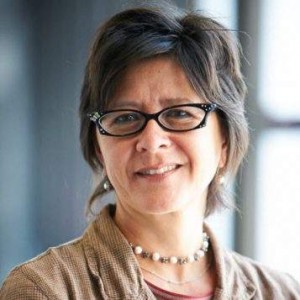 By Lauren Knopf, M.A.
Dr. Denise Hien has conducted programmatic research on women鈥檚 mental health, trauma and addiction for over 20 years. Having taught at 果酱视频 early in her career in the late 1990s, she returns to Derner this spring, bringing a wealth of knowledge on evidence-based treatments for trauma-related psychiatric disorders and comorbid addictions.
LK: What made you decide to return to Derner?
DH: I felt that what鈥檚 happening at Derner now is very much synergistic to where I am in my life and my interests. It鈥檚 a place that鈥檚 creating new energy around psychotherapy research, in particular, dynamically oriented research. It鈥檚 exciting to be around other people who are successful and interested in the kind of work that I do. There鈥檚 also faculty doing work in trauma and in psychotherapy research, and then there鈥檚 the interest in addiction, which is the new piece I鈥檓 able to bring to the mix. So there were a number of converging factors that made it feel like it was a good time to come back to 果酱视频.
LK: I can imagine there are tremendous differences in the doctoral program at Derner now compared to what it was when you first worked at 果酱视频 in 1995.
DH: Certainly, although I鈥檝e changed in 20 years, too! I think that the program has only gotten stronger. From the APA point of view, I think Derner has made changes in order to retain a strong clinical and dynamic orientation and appreciation, but at the same time to adopt a more integrated perspective. I think teaching students to value other perspectives is really important in today鈥檚 marketplace. That鈥檚 something that I think has been hard for dynamically oriented programs to do. Either you completely change and become a CBT shop, or you get entrenched in an attitude of, 鈥淭his is the only way to think.鈥�
LK: It seems like that type of attitude is antithetical to the type of research you have done.
DH: I鈥檓 an integrative person who was trained from a dynamic perspective. The work that I do is very much focused on how past and present can co-exist. Trauma theory tends to be non-discipline specific and draws on an interdisciplinary perspective, which is one thing that drew me to the field. But I think historically researchers and practitioners have had a perspective that keeps them from realizing how many common factors there are across treatments. Even the most adherent CBT practitioner still will get to know a patient鈥檚 past and how it might be active in the present. And there鈥檚 a therapeutic alliance that drives all treatments鈥攚e know that from all of the research that鈥檚 been done. The techniques are important too, but not as important. The most powerful element is the relationship
LK: Many of your studies of treatments for women with a history of trauma and comorbid addictions have found support for the self-medication model of substance abuse. In your experience, is trauma implicated in the majority of addictions, or are there other important factors?
DH: The causes of addiction are multifaceted. For some people, having an early trauma history is probably a causal factor in developing a substance use disorder. That鈥檚 not to say that anyone who is exposed to trauma will develop a substance use disorder, but it is one mechanism by which that happens. There鈥檚 a lot of science that shows that trauma changes the brain in particular ways that make it more likely to succumb to the need for reward and activation. From a psychological perspective, it makes perfect sense that your emotional experiences could impact the likelihood that you would use a substance to selfsoothe. Recently there was a study called the ACES [Adverse Childhood Experiences] study, conducted jointly by the CDC and Kaiser Permanente, looking at the relationship between childhood adversity and the development of all different sorts of problems, addiction being one of them. This work has showed definitively that there is a clear cut, almost linear relationship between the number of exposures to traumatic child events and the development of all kinds of negative health outcomes, including addiction, obesity, and premature mortality. The majority of women who end up in treatment for drug addiction have significant childhood and ongoing trauma, interpersonal violence histories and addictions. For them, PTSD, depression, anxiety or other trauma-related pathology is part of the clinical picture of addiction.
LK: Seeking Safety is one trauma-focused addiction intervention that has significant empirical support, but at times you鈥檝e lamented that not all studies of Seeking Safety are as rigorous as they could be, leaving gaps in the empirical base. Where is the tipping point, when enough empirical evidence is amassed that an intervention is accepted as evidence-based?
DH: That鈥檚 a big question. Both Seeking Safety and Relapse Prevention are incredibly powerful interventions. What we鈥檝e found is, whenever you set up a study where you鈥檙e comparing a treatment to another that is already really powerful, you鈥檙e not going to see a very big difference. This is disappointing to some researchers, who would say you should never compare your experimental treatment to an active treatment so you can achieve significant results. It鈥檚 interesting, because we don鈥檛 see this mindset when it comes to medications. If both Zoloft and Paxil are helpful, then fantastic! With medication, we want more options, more alternatives. I don鈥檛 know how this has happened, but in the psychotherapy world there has been a focus on finding the 鈥渙ne鈥� treatment. Seeking Safety is a very good first line treatment, but does it solve all of the person鈥檚 problems? No. Might patients need other things in addition, whether it鈥檚 another type of trauma treatment, or longer treatment, or medication? Yes, they need all of those things. These are very sick people who have had horrible things happen in their lives. A dose of 12 sessions of anything isn鈥檛 going to fix things for them.
LK: Do you think this desire to find the 鈥渙ne鈥� treatment is waning? DH: I hope so. I know it鈥檚 waning for me. The work I鈥檓 doing now is all about personalized and individualized approaches about understanding what works for whom, when does it work, how does it work, when does it not work? I鈥檓 interested in the whole gamut of questions other than, 鈥淲hich treatment is better?鈥� This, to me, is a boring question and really sort of sets us up for failure. For me, research is about helping guide us along the path. Neither research nor clinical work alone is going to give us all the answers about how to treat the human heart and mind. It鈥檚 more like can we get some beacons of light to guide us in the darkness. A research study, if we do it well enough, can give us some guidance.
LK: What is one of your most interesting findings to date?
DH: I was involved in a research project years ago at St. Luke鈥檚 Roosevelt Hospital. We were fortunate to have access to every single mental health service available at the hospital for our project鈥攊npatient, outpatient, child psychiatry, day programs, and addiction services. We conducted SCID evaluations with patients in each of the separate mental health units, and we found that all patients were the same. About 50% of the patients in mental health settings had diagnosable addiction problems and about 50% of those in substance use settings also qualified for other mental health diagnoses. This demonstrated very clearly that dividing people with addictions and people with mental health disorders into separate clinical populations is quite arbitrary. If we know that 50% of patients have co-morbid disorders, then we can see that co-morbidity is not the aberration, it鈥檚 the norm.
LK: You mentioned earlier that your interest now is which treatments work for whom. Is this research done less frequently than comparison studies because it is too labor intensive, or because there is a methodological bias?
DH: Well, actually I think we鈥檝e come full circle. Lately the NIH has expressed significant doubts about the value of what the single site clinical trial can achieve. Single site clinical trials take a lot of time and cost a lot of money, and at the end of the day there are questions about how generalizable the findings of any one small scale study are. Right now, I鈥檓 working on a grant with colleagues that we鈥檙e calling the 鈥渧irtual multisite clinical trial.鈥� This method allows us to pool a large number of single site studies together and use innovative statistical modeling techniques to ask even more nuanced questions than the typical multi-site trial. I鈥檓 very excited about it, and I feel like it鈥檚 a direction that avoids the limitations of a traditional clinical trial, while making use of all of the work that others have already done and taking it to the next level.
LK: I have to admit that makes me feel better about research in general, that we can make use of existing data in a way that will support this more detailed approach of determining what works best for different subsets of patients.
DH: Making use of research has motivated all of my work. Clinical theory has influenced the way I think about the research that I do, and vice versa. I live a bidirectional life in that regard, and it鈥檚 a good thing. The research that I鈥檝e done has also been that way in terms of deriving the ideas from community-based practices, participating in the development of the research ideas, the conduct of the research and then giving back at the end of the day. It鈥檚 very rewarding to be able to communicate with and to influence people working in the field so that research is not just done in an Ivory Tower by people who have no knowledge of what it鈥檚 like to work with actual patients in the real world. The type of studies I strive to do honor the fact that whatever you do in the lab should have relevance in the real world.
For further information, please contact:
Todd Wilson
Strategic Communications Director听
p 鈥� 516.237.8634
e 鈥� twilson@adelphi.edu