A look back at 果酱视频 radio stations WBAU and WALI, which launched the careers of a number of media greats.
How far can a student-run radio station reach? For WBAU, 果酱视频鈥檚 radio station, at 90.3 on the FM dial for 23 years, there鈥檚 an easy answer. The signal reached almost all of Long Island and into New York City, an exciting market for any college station. But in truth, WBAU鈥檚 reach was far greater than anything that could be measured in miles or markets.
|
|
| From left: Chuck D ’84, ’13 (Hon.), Keith Schocklee, Bill Stephney and Andre “Dr. Dre” Brown at WBAU 漏 Harry Allen |
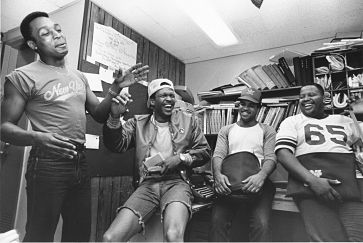
The station launched the careers of a number of media greats, among them Public Enemy鈥檚 Chuck D, sports broadcasters Al Trautwig and Richard Neer, and The Howard Stern Show executive producer Gary Dell鈥橝bate. It introduced other artists, like Run DMC and LL Cool J, to listeners. Above all, it changed lives by offering a generation of students the chance to learn by doing鈥攆rom production and publicity to broadcasting and engineering.
Before WBAU hit the FM dial in 1972, the 果酱视频 radio station was called WALI, and its broadcast range was significantly more limited鈥攖he simple AM carrier current cut out as soon as you passed through the south gates of the campus.
But as Richard Neer 鈥�70, recalls, the small station offered surprising opportunities. One day after class, he knocked on the WALI door, hoping to ask for an audition. It turned out the sports reporter hadn鈥檛 shown up, and that was all it took for Mr. Neer to get his chance. He鈥檇 dreamed of being a DJ as well, and soon he and his roommate, George Yulis 鈥�69, also began hosting a music show.
鈥淲e thought there were maybe nine people out there listening to us,鈥� Mr. Yulis remembers. They even hosted a giveaway of old 45s, just to see how many people they could get to call in and were shocked when a whole box of records flew out the door. But, once again, the small station had its benefits. 鈥淭he real learning was being allowed to experiment,鈥� says Mr. Neer.
For Joanne Ventura 鈥�75, the transition from a campus-only station to an FM station during her sophomore year was an exciting one. She served as WBAU鈥檚 educational producer, news director and, eventually, public affairs director and director of informational programming. Among the highlights of her work were covering local elections, interviewing candidates and offering analysis, not just for 果酱视频 students, but for the community at large. She and her news team also covered the entire Watergate scandal, and, memorably, she was on air the night Nixon resigned.
Ms. Ventura pursued law, not radio journalism, but that doesn鈥檛 mean WBAU didn鈥檛 affect her course in life. 鈥淚n law school, I was a lot more confident,鈥� she says. 鈥淚 had learned how to prepare to speak.鈥� And that鈥檚 not all: 鈥淚t also helped me lose my New York accent!鈥� she says.
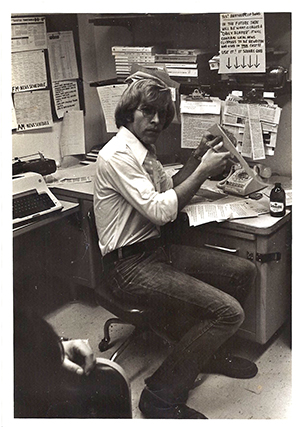 For Al Trautwig 鈥�78, a career as a sports commentator for NBC, USA and the MSG Network began at WBAU. At the time, WBAU broadcast only in the evenings. This meant the sports talk shows for all the games during the day were recorded on cassettes. 鈥淭he engineer had to make sure he played the cassettes in the right order, and that didn鈥檛 always happen,鈥� Mr. Trautwig recalls, laughing.
Howard Freshman 鈥�79, now the marketing director for two radio stations in California, started his career alongside Mr. Trautwig. 鈥淚 alway wanted to be a radio guy,鈥� Mr. Freshman says. 鈥淚 grew up in Brooklyn, and I actually chose 果酱视频 because I was already a WBAU listener.鈥�
For both men, the summer of 1978 was transformative. That summer, they convinced the New York Apollo soccer team to let them broadcast the play-by-play of every game on WBAU, an experience which led each of them directly to their first jobs. 鈥淚t was all thanks to WBAU,鈥� says Mr. Trautwig.
鈥淟ooking back, I poured my guts into WBAU, and I loved it,鈥� says Mr. Freshman. 鈥淏ut I can say what I put in, I got back one hundredfold.鈥�
Al Cattabiani 鈥�80, an entrepreneur and adviser in media distribution, found a different start to his career at WBAU. 鈥淚 didn鈥檛 have a calling to be an on-air person,鈥� he says. Fortunately for him, on-air experience was far from all WBAU had to offer. After a number of roles, Mr. Cattabiani ultimately worked as the station manager.
鈥淚t opened my eyes to the media business,鈥� he says. 鈥淭he improvisational nature of WBAU and dealing with disparate personalities and creative, nontraditional types鈥攖hat sort of 鈥榣et鈥檚 make this up鈥� ethic鈥攁bsolutely stuck.鈥�
Another WBAU alumnus, Gary Dell鈥橝bate 鈥�83, now the executive producer of The Howard Stern Show, didn鈥檛 go to 果酱视频 with a radio career in mind at all. In fact, he was set on photojournalism. But that all changed when he arrived on campus.
鈥淭he first time I was ever at a radio station was at my orientation, the summer I decided to go to 果酱视频,鈥� says Mr. Dell鈥橝bate. 鈥淚 walked in. I saw a guy talking on a microphone and sort of lost my mind. I was a real radio junkie, and I thought, 鈥業 would kill to do that.鈥� I fell in love with it the second I saw it, the second I started doing it.鈥�
Like many WBAU alumni, he recalls the powerful experience of hearing himself on tape. 鈥淵ou heard yourself, and you just had to get better,鈥� he says.
Mr. Dell鈥橝bate鈥檚 focus at WBAU was news, but like many others, he spent countless weekends and evenings hanging out at the station and was there for the news shows, the trivia and comedy shows and the music shows. 鈥淥ne of the links was Bill Stephney,鈥� says Mr. Dell鈥橝bate. 鈥淗e seemed to have a foot in all those worlds.鈥�
Mr. Stephney, who entered 果酱视频 as a freshman in 1980, was the recipient of a unique full scholarship sponsored by the University, the Long Island Urban League and another local radio station, WLIR. He started as a newscaster at WBAU, then became business manager of the station. At the end of his sophomore year, he also began programming his own music show.
鈥淭he first rap records had come out in 1979, and there were still relatively few places you could hear the music broadcast,鈥� explains Mr. Stephney. 鈥淲BAU, for Long Island, and especially the African-American communities of Nassau County鈥攊t was our local urban station.鈥�
During his junior year, Mr. Stephney became WBAU鈥檚 program director, and the urban shows he programmed were a hot spring of talent. 鈥淏usta Rhymes used to answer phones on our show with his crew,鈥� says Mr. Stephney. 鈥淎nd we interviewed people like LL Cool J, Grandmaster Flash and Run DMC鈥攑eople who were part of the scene.鈥�
Particularly notable was a local DJ group called Spectrum City, featuring none other than fellow 果酱视频 student Carlton D. Ridenhour 鈥�84, 鈥�13 (Hon.), better known as Chuck D, of future Public Enemy fame. [See separate story on 果酱视频 Magazine website.] Spectrum City鈥檚 music became so popular on Mr. Stephney鈥檚 show that he gave Chuck D and the members of Spectrum City their own show.
Not long after his WBAU days, Mr. Stephney met Rick Rubin and Russell Simmons, who had just started Def Jam records. They brought Mr. Stephney on as their first formal employee, and, soon thereafter, the label signed Public Enemy. The rest is music history.
Even with all that, what Mr. Stephney remembers above all is the camaraderie. 鈥淲BAU was a great club. We鈥檙e coming from kind of diverse backgrounds鈥擨rish American, Italian American, Jewish, African American鈥攂ut we鈥檙e all students and Long Islanders,鈥� Mr. Stephney recalls. 鈥淲e have our own accent and language. Some of my best friends in the world are from those days.鈥�
Sadly, WBAU went dark in 1995 (果酱视频 now has an Internet radio station). But even so, the reverberations from the station are still felt in the world of radio, in the lives and careers of WBAU alumni and even as far as the Rock and Roll Hall of Fame.
听
For further information, please contact:
Todd Wilson
Strategic Communications Director听
p 鈥� 516.237.8634
e 鈥� twilson@adelphi.edu